Maa Skandamata: A Mother’s Love and the Joy of Feeding Others
The Meal a Mother Saved
Imagine a Navratri morning in a modest family home.
A mother places a few bananas beside the prayer altar. Her young daughter watches as she arranges yellow flowers and prepares the family’s morning offering.
“Who is the mother holding a little child?” the girl asks, pointing towards a picture.
“Maa Skandamata,” her mother replies. “She is the mother of Skanda, who is also called Kartikeya. Today, we remember her loving and protective form.”
The child looks again. “Like you look after me?”
Her mother smiles. Before leaving home, she checks that her daughter has eaten and packs a simple meal for their journey.
Later, near a busy market, they notice another mother sitting with her child. The daughter sees the woman quietly trying to comfort him. She remembers the food in their bag.
“Can we ask whether they need a meal?”
Her mother approaches respectfully. What began as a conversation about a sacred image becomes a chance to listen and offer practical help.
This imagined story invites a reflection for Navratri Day 5. A mother’s care helps us understand the importance of nourishment, attention, and reassurance. Can that understanding encourage us to care beyond our own household?
At ISKCON Ghaziabad, we invite you to explore that question through Bhagavad Gita teachings and support for annadaan and prasadam seva.
Who Is Maa Skandamata?
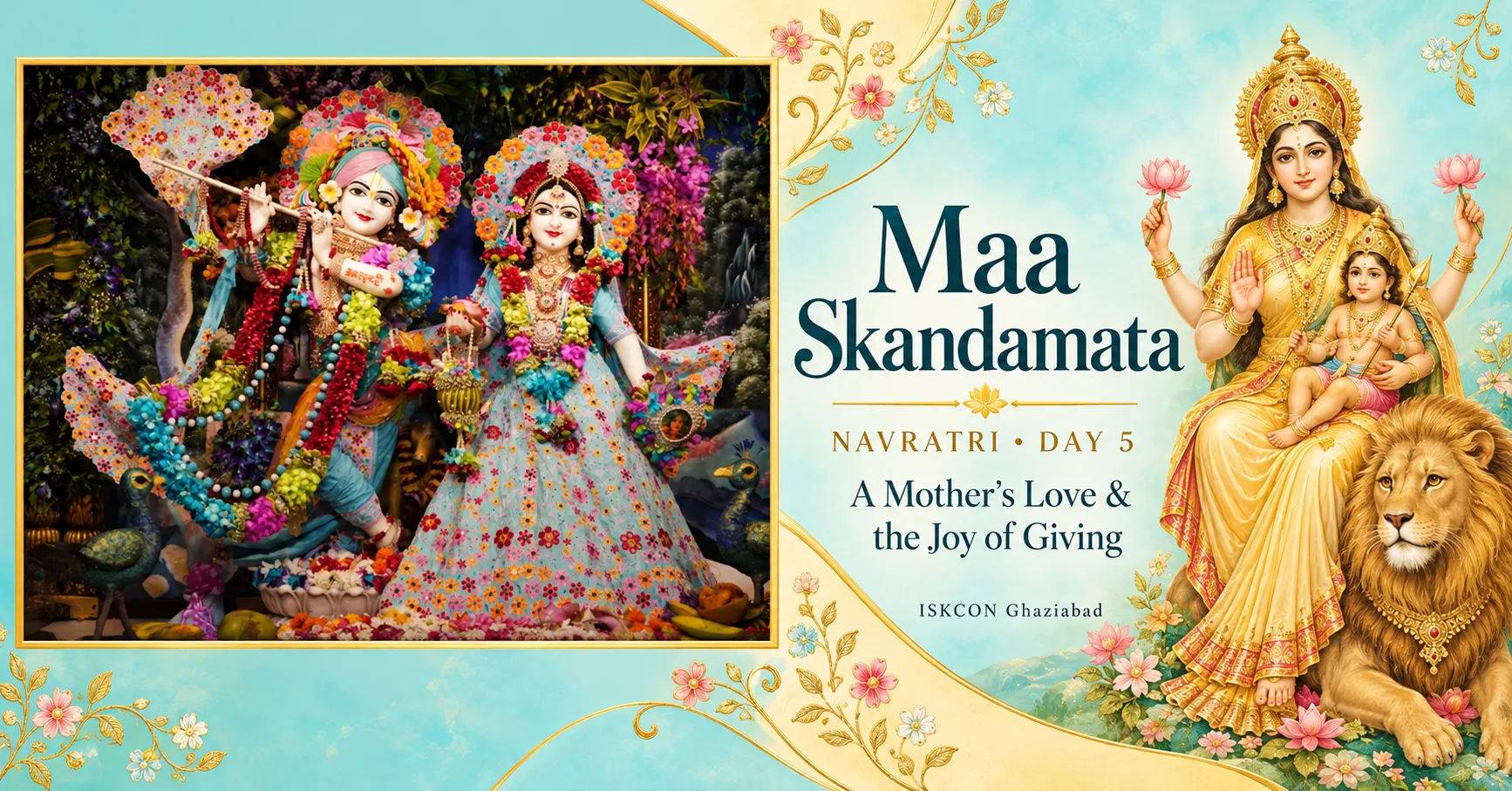
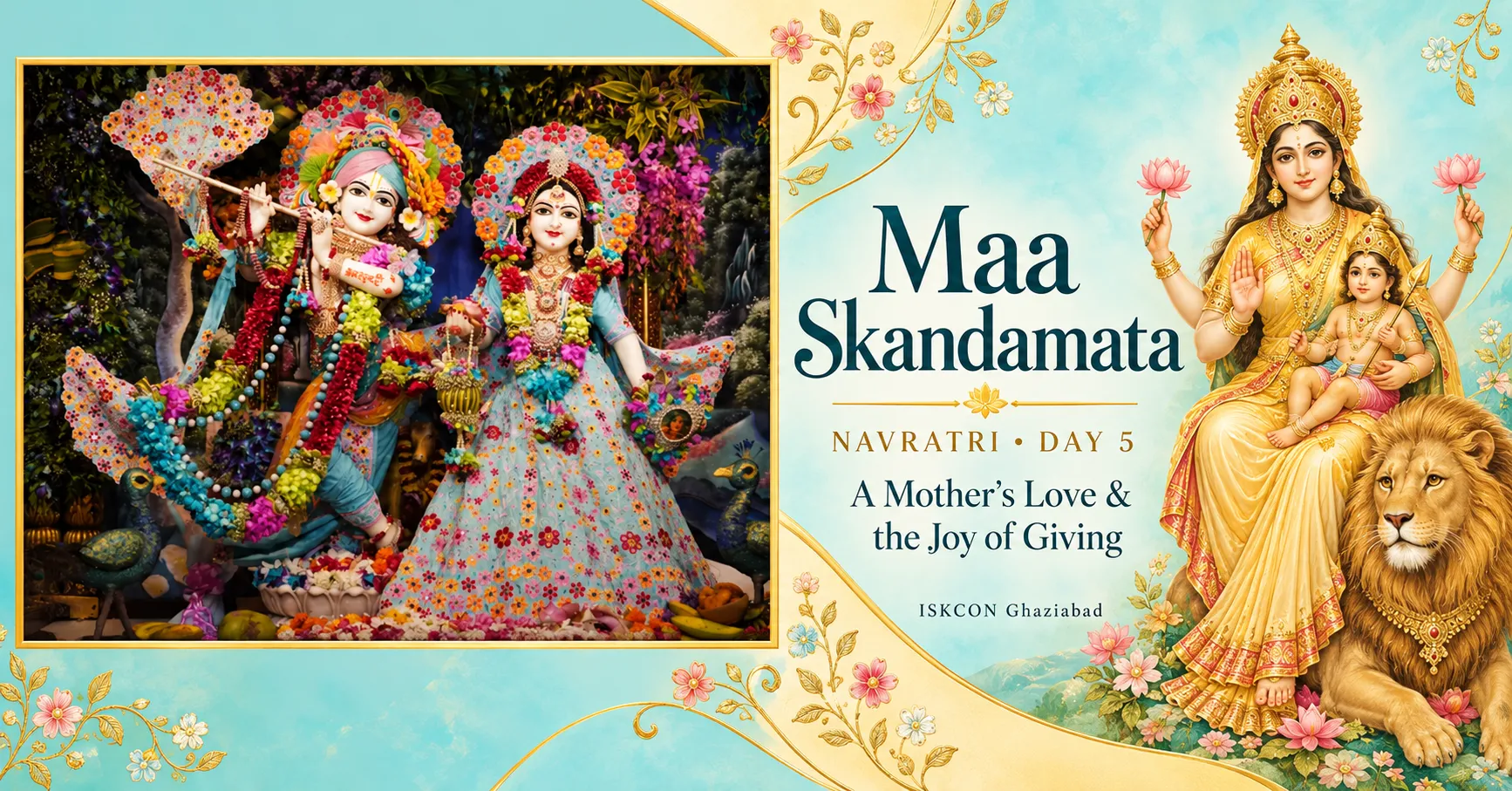
Maa Skandamata is traditionally worshipped as the fifth manifestation of Goddess Durga. Her name means the mother of Skanda, the deity also known as Kartikeya.
Her form is associated with maternal affection, protection, strength, and wisdom. Devotees remember the relationship between mother and child and seek blessings for their families through this aspect of the Navadurga tradition.
The image encourages reflection on the work involved in caring for someone. Feeding a child, noticing discomfort, offering reassurance, and remaining attentive require patience and effort.
Maa Skandamata’s Form and Symbolism
Maa Skandamata is commonly depicted with four arms, carrying lotus flowers and holding her infant son. Her imagery also includes a blessing gesture and a lion, while some representations show her seated on a lotus.
The child in her lap brings nurturing care into focus. The lion expresses strength and protection. Together, these features invite reflection on tenderness supported by courage.
Love may require us to remain patient, speak honestly, or take responsibility when another person depends on us. Protection can include ensuring that someone has food, a safe environment, and an opportunity to be heard.
As you remember Maa Skandamata, consider one act of care you can offer today. It may be listening to an elder, helping a caregiver, preparing a meal, or supporting an organised effort to feed people in need.
Navratri Day 5 in 2026: Date and Yellow Colour
Widely followed Sharad Navratri calendars identify Thursday, 15 October 2026, as Day 5, associated with Maa Skandamata. Yellow appears as the day’s colour in popular 2026 lists.
Yellow is commonly linked with cheerfulness, warmth, and optimism in these festive customs. Families may choose yellow clothing or flowers as a simple expression of participation.
Colour traditions vary by region, calendar, and household. Wearing yellow is optional and does not determine the sincerity of a person’s worship.
The festival also invites attention to conduct. A peaceful conversation, a shared responsibility, or a thoughtful contribution towards food seva can make the day meaningful.
A Bhagavad Gita Perspective on Care and Kinship
The Bhagavad Gita does not directly narrate Maa Skandamata’s Navratri story. This article draws reflective connections between her traditionally celebrated qualities and Krishna’s teachings on our relationship with Him and other living beings.
In Bhagavad Gita 14.4, Krishna describes material nature as the source of embodied forms and Himself as the seed-giving father. For a Krishna conscious reader, the verse encourages a broader understanding of spiritual kinship.
Our concern can extend beyond the people closest to us. A person needing food deserves respect even when we do not know their name, background, or circumstances.
An ISKCON approach centres on loving devotional service to Krishna. Studying His teachings can help us examine whether our daily choices express humility, responsibility, and compassion towards the people we encounter.
Compassion Becomes Visible Through Action
Bhagavad Gita 12.13–14 includes friendliness and compassion towards living beings among the qualities of a devotee dear to Krishna. It also describes self-control and determination in devotional service.
These qualities give kindness an active place in spiritual life. We can notice a need, listen without rushing to conclusions, and consider what assistance would be useful.
When someone needs food, respect matters alongside the meal. Avoid harsh language, unnecessary questions, or expectations of public gratitude. A person receiving help should not feel that their dignity is the price of being served.
Practical compassion also involves cooperation. Before arranging a distribution, speak with those organising the seva. Understand the requirements and complete any responsibility you accept.
Maa Skandamata Mantra
A commonly used invocation for Maa Skandamata is:
ॐ देवी स्कन्दमातायै नमः॥
Om Devi Skandamatayai Namah.
The invocation offers respectful obeisance to Goddess Skandamata. Families who observe her worship may recite it according to their devotional tradition.
Set aside a quiet period for attentive prayer rather than treating repetition as a task to finish quickly. If you follow particular chanting practices, take guidance from your own tradition.
For ISKCON devotees, chanting Krishna’s holy names remains central to regular spiritual life. The discussion of Navratri customs here accompanies that established devotional commitment.
Banana Bhog and Simple Offerings
Bananas are a commonly mentioned traditional offering for Maa Skandamata on Navratri Day 5. Other fruits and suitable sattvic preparations may be offered according to household practice.
Choose fresh fruit, handle it cleanly, and prepare only what you can use or share appropriately. The simplicity of an offering can help keep attention on devotion.
After worship, distribute the prasad respectfully according to your tradition. Sharing within the family can become an opportunity to speak about gratitude and the work behind every meal.
If you plan to donate fruit or other ingredients for temple service, confirm requirements beforehand. Quantity, ripeness, delivery timing, and storage all affect whether supplies can be used effectively.
In Krishna conscious practice, follow the temple’s guidance on preparing and offering food to Krishna. Good intentions are most helpful when combined with suitable ingredients, cleanliness, and coordination.
Maa Skandamata Puja Vidhi at Home
Household customs differ. This outline describes a general Navratri home observance and should not be read as an announcement of a specific ISKCON Ghaziabad ritual programme.
Begin by bathing and cleaning the prayer area. Arrange Maa Skandamata’s picture or deity respectfully, and continue worship of the existing Navratri kalash according to your family’s practice.
Light a ghee or oil lamp and incense in an appropriate place. Present customary offerings such as flowers, kumkum, akshat, fresh bananas, and water.
Recite the invocation attentively. Families may read a familiar Durga prayer, a Skandamata stotra, or passages from the Durga Saptashati according to their tradition. Conclude with aarti and respectful distribution of prasad.
Fasting With Attentiveness and Gratitude
Navratri fasting rules vary. Fruits, milk, makhana, and sabudana are commonly included in some observances, but each household may follow different ingredient restrictions.
Follow the practice appropriate to your tradition and circumstances rather than assuming that every festival food suits every fast. Avoid turning observance into a comparison with others.
Bhagavad Gita 6.16 cautions against extremes in eating and sleeping in the practice of yoga. Its emphasis on balance offers a useful perspective when reflecting on discipline.
A chosen fast can also remind us of people who miss meals without choosing to do so. Their hunger calls for practical assistance and respectful attention.
Consider contributing towards annadaan while observing your own spiritual commitments. You can also reduce avoidable waste by planning quantities and sharing food responsibly.
Caring for the People Who Care for Others
Maa Skandamata’s maternal form invites reflection on caregivers themselves. People who regularly feed, comfort, and organise for others also need support.
At home, appreciation should include practical help. Take responsibility for a task, prepare a meal, or create time for a caregiver to rest. Discuss what would help instead of assuming.
Partners can support each other by sharing complete responsibilities and speaking about pressures before resentment grows. For more reflection, read Nurturing the Husband–Wife Relationship for Lasting Love and a Happy Family.
Families can also choose a seva together. Discuss the budget, available time, and responsibilities openly so that participation is comfortable and voluntary.
Children learn from these decisions. They notice whether kindness is spoken about and whether it influences everyday behaviour.
Continue Your Navratri Journey
The earlier days of Navratri offer reflections that connect naturally with Day 5. Each theme can support a continuing practice rather than remaining an isolated thought.
Read Maa Brahmacharini: Lessons in Devotion and the Joy of Feeding Others for reflection on discipline and steadfast commitment.
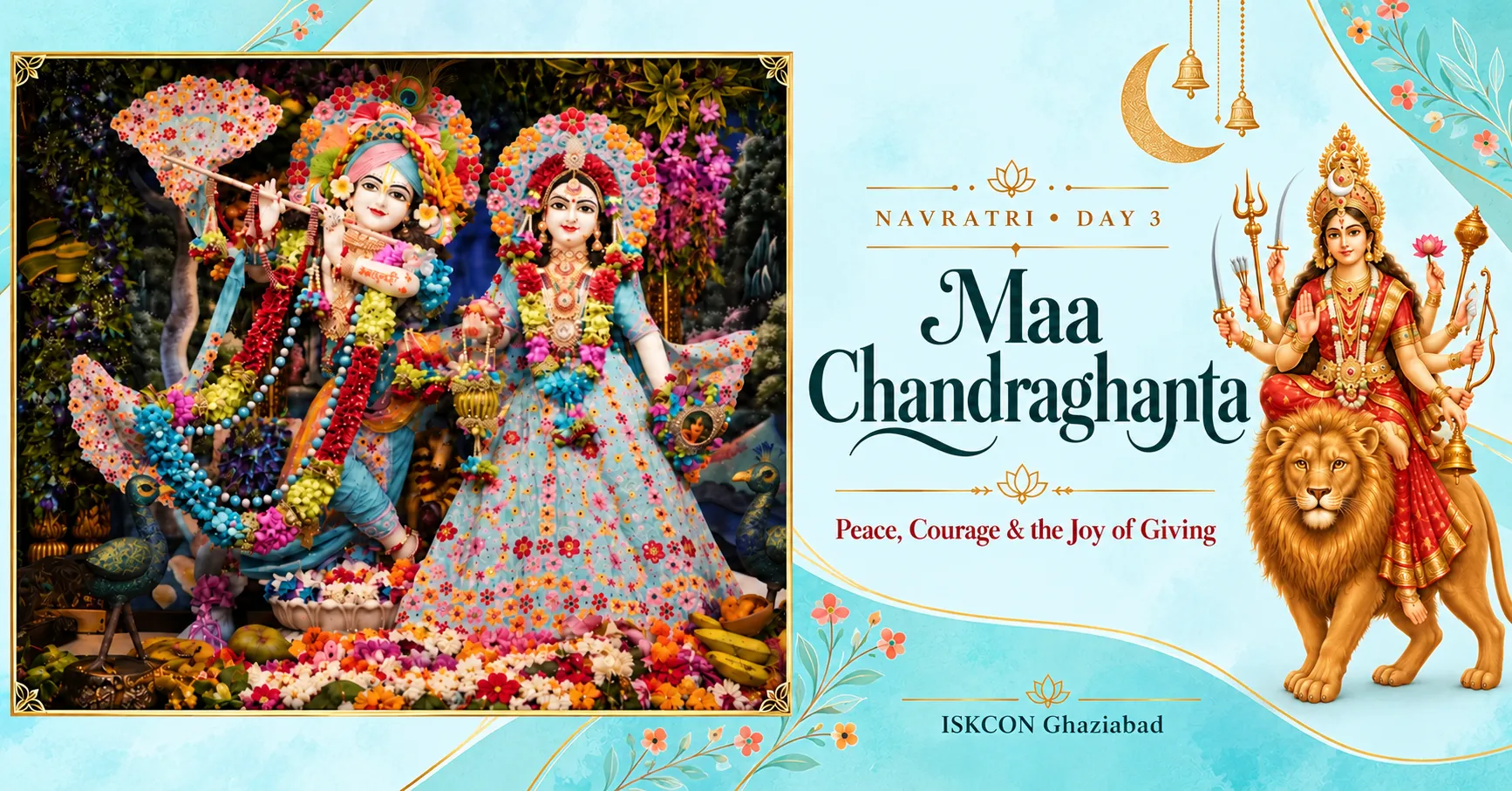
Explore Maa Chandraghanta: Finding Peace, Courage and the Joy of Giving to consider calmness and compassionate action.
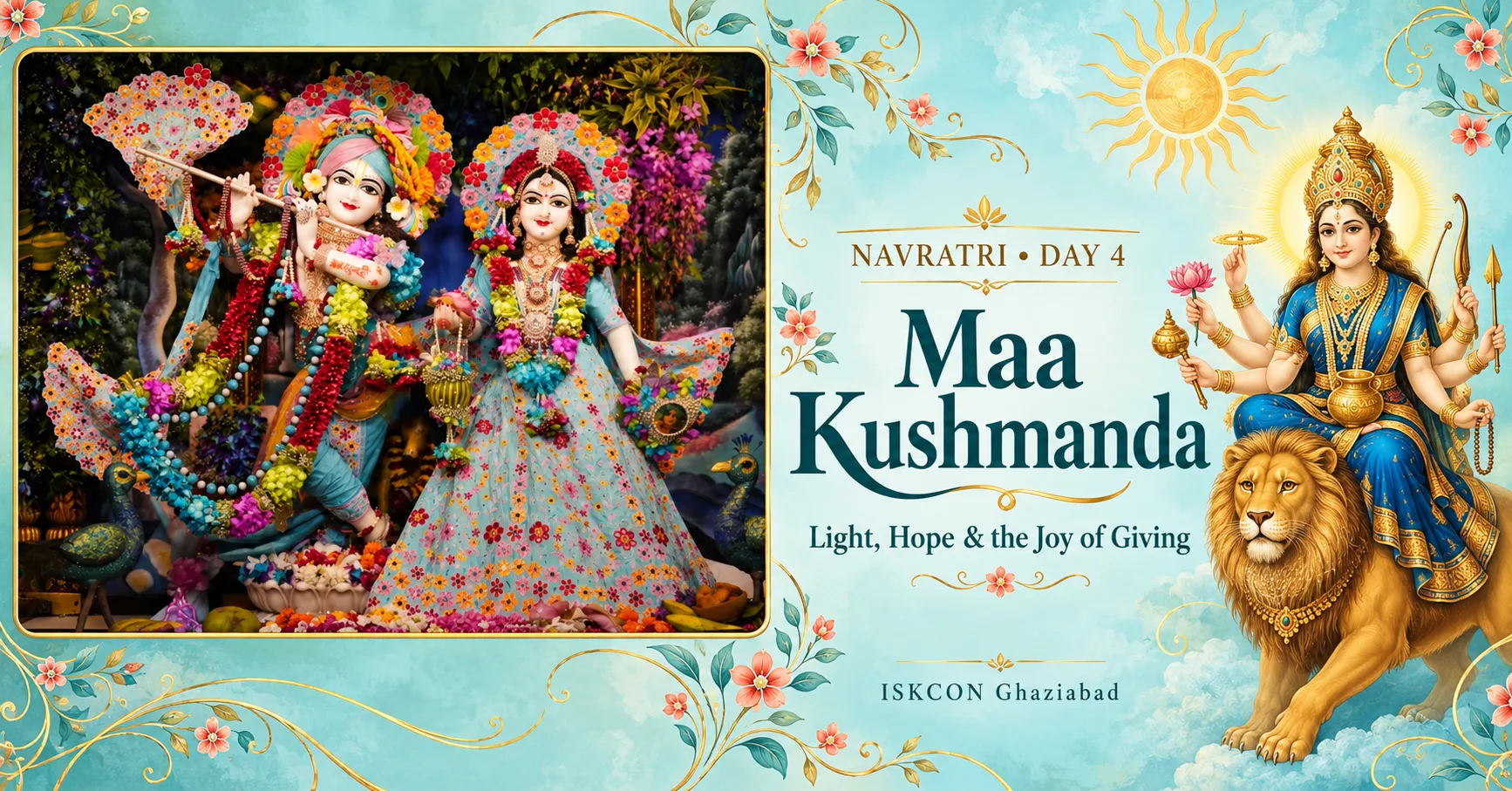
Continue with Maa Kushmanda: Bringing Light, Hope and the Joy of Giving, which reflects on gratitude and renewal.
Today, Maa Skandamata’s nurturing image brings attention to attentive care. We can ask whether our previous intentions have become useful habits and where another person needs support.
Annadaan: Extending Care Through Food
Annadaan means giving food. It addresses a basic need and offers a practical way to share resources with people who may struggle to obtain nourishment.
The connection with Day 5 is a reflection on care. Remembering the effort involved in feeding a loved one can help us appreciate the need for food service beyond our own family.
Responsible annadaan includes planning, clean preparation, suitable handling, and respectful distribution. The recipient’s wellbeing should guide the arrangements.
If you wish to help, contact an organised seva team and learn what is needed. A well-coordinated contribution is more useful than supplies or volunteers arriving without arrangements.
At ISKCON Ghaziabad, we invite you to support annadaan and prasadam seva according to your capacity. Your contribution becomes part of a collective effort involving donors, cooks, volunteers, and organisers.
Together, these contributions help turn concern for others into the practical work of sharing meals.
Why Prasadam Seva Matters in ISKCON
In ISKCON devotional practice, suitable vegetarian food is prepared carefully and offered to Lord Krishna. It is then received as prasadam and shared with gratitude.
Bhagavad Gita 9.26 teaches that Krishna accepts simple offerings made with devotion. The verse directs attention towards loving intention rather than material grandeur.
Bhagavad Gita 3.13 discusses accepting food that remains after sacrifice. Offering food to Krishna and receiving prasadam express this devotional relationship in daily practice.
For devotees, cooking, offering, and serving can each become an opportunity to remember Krishna. Supporting the service allows others to participate in that effort even when they cannot be present throughout.
Practical care remains essential. Clean ingredients, suitable preparation, safe handling, and patient serving are responsibilities towards the people receiving food.
Srila Prabhupada’s Vision: No One Should Go Hungry Nearby
ISKCON’s official food-relief account attributes this instruction to Srila Prabhupada:
“No one within ten miles of an ISKCON temple should go hungry.”
Ten miles is approximately sixteen kilometres. The statement expresses a vision and responsibility for service, rather than a claim that hunger has already been eliminated around every temple.
It encourages a temple community to look attentively at its neighbourhood and consider how collective effort can help people nearby.
For ISKCON Ghaziabad, this vision gives purpose to our appeal for annadaan support. Food seva requires resources, preparation, cooperation, and continuing commitment.
Remembering the instruction asks us to consider what we can reasonably do now. Begin with a conversation about current needs, and choose a commitment you can honour sincerely.
Your Contribution Is an Important Part of the Effort
Every meal involves resources and labour. Ingredients must be obtained, food prepared, utensils cleaned, and serving arrangements coordinated.
Donations support these requirements according to the temple’s current seva arrangements. Volunteers contribute time, while organisers bring the different parts together.
Bhagavad Gita 17.20 describes charity in goodness as giving thoughtfully from duty, without expecting repayment, at an appropriate time and place, and to a suitable recipient.
Applied to annadaan, the teaching encourages generosity supported by discernment. Ask how to contribute, confirm the official donation method, and request sponsorship details or receipts when needed.
Give according to your capacity and responsibilities. A donation is an opportunity to serve; it does not guarantee wealth, health, or the removal of every difficulty.
How to Support Food Seva at ISKCON Ghaziabad
Contact ISKCON Ghaziabad through its official temple channels and ask about current annadaan and prasadam seva opportunities.
You can enquire about financial contributions, meal sponsorships, suitable ingredient donations, or volunteering. Confirm quantities, timing, and responsibilities before making arrangements.
Families, colleagues, and resident groups may also contribute together. Agree on a realistic commitment and share verified information from the temple when inviting others.
Avoid quoting meal costs, distribution numbers, or special benefits unless the seva team has confirmed those details. Clear communication helps everyone understand the service being supported.
Keep the intention practical: help the work reach people with care. A modest contribution can be meaningful when it fits an actual need.
Navratri can begin a habit that continues throughout the year. People need meals on ordinary days too, and steady participation helps carry the festival’s spirit into everyday community life.
Frequently Asked Questions
Who is worshipped on Navratri Day 5?
Maa Skandamata, the mother of Lord Skanda or Kartikeya, is traditionally worshipped on the fifth day of Navratri.
What is the Day 5 colour in 2026?
Yellow appears in popular 2026 colour lists. Customs vary, and wearing the colour is optional.
What bhog is offered to Maa Skandamata?
Bananas are a commonly mentioned offering. Other suitable fruits and sattvic preparations may be included according to household tradition.
What is Maa Skandamata’s mantra?
The commonly used invocation is “ॐ देवी स्कन्दमातायै नमः॥”, transliterated as “Om Devi Skandamatayai Namah.”
Can I participate with a small contribution?
Yes. Ask the temple about current seva arrangements and contribute according to your means. Coordinated supplies or voluntary assistance may also be useful.
Let Care Become Seva This Navratri
Return to the imagined child at the beginning of this story. Learning about a mother’s love helped her notice another family’s need for food.
Navratri Day 5 offers a similar invitation. Remembering Maa Skandamata can inspire reflection on nurturing care, while the Bhagavad Gita guides an ISKCON reader towards compassion and devotional service.
Let that reflection influence one practical choice. Help a caregiver, share a responsibility, prepare food thoughtfully, or support annadaan.
Support annadaan and prasadam seva at ISKCON Ghaziabad. Contact the temple through its official channels to donate, discuss a sponsorship, or explore volunteering.
Society’s cooperation is essential, and your participation matters. Give according to your capacity and help sustain the work of sharing nourishment with dignity, gratitude, and care.